Restoring the Appearance of Automotive Paint Through Careful Surface Correction
A vehicle's paint can gradually develop visible imperfections even when it is regularly washed. Fine scratches, swirl marks, oxidation, water spots, and other surface defects may appear as a result of everyday driving, improper washing, environmental exposure, or simple aging.
Paint correction is a process designed to improve the appearance of automotive paint by carefully reducing or removing certain surface imperfections. Unlike ordinary cleaning, the goal is not simply to remove dirt. Instead, correction focuses on the condition of the painted surface itself.
The process requires careful evaluation because automotive paint has a limited amount of clear coat. Removing too much material can create unnecessary risk. For this reason, correction should be approached as a controlled surface-refinement process rather than aggressive polishing.
This guide explains common paint defects, why they develop, how correction works, what factors influence the process, and how proper maintenance can help preserve the results.
What Happens to Automotive Paint Over Time?
Automotive paint is exposed to many environmental and physical factors.
During regular use, a vehicle encounters:
Road dust
Dirt
Sand
Rain
Sunlight
Tree sap
Bird droppings
Insects
Road debris
Improper washing techniques
Repeated exposure can gradually affect the clear coat and overall appearance.
Some damage is immediately visible, while other imperfections become noticeable only when light reflects across the surface at certain angles.
Common Types of Paint Imperfections
Different defects require different approaches.
Swirl Marks
Swirl marks are fine circular or curved scratches that often become visible under direct sunlight or strong artificial lighting.
They are commonly associated with improper washing or drying techniques.
Fine Scratches
Light scratches can develop when abrasive particles come into contact with the painted surface.
Water Spots
Mineral deposits may remain after water evaporates, particularly when water is allowed to dry on the paint.
Oxidation
Oxidation can create a dull or faded appearance, especially when paint has experienced prolonged environmental exposure.
Etching
Acidic contaminants such as bird droppings or certain environmental substances can sometimes leave etched marks when they remain on paint for too long.
Identifying the type of defect is an important first step.
Why Surface Assessment Comes First
Before any correction work begins, the paint should be inspected carefully.
An assessment may consider:
Severity of scratches
Thickness of the clear coat
Paint condition
Previous correction work
Oxidation
Contamination
Areas with particularly thin paint
Lighting plays an important role because some imperfections are difficult to see under ordinary indoor conditions.
Different lighting angles can reveal defects that remain hidden in low light.
The Difference Between Cleaning and Correction
Cleaning removes dirt and contaminants from a vehicle's surface.
Correction addresses imperfections within the paint's upper surface.
For example, washing may remove road grime but will not generally eliminate swirl marks. Similarly, removing a water spot from the surface does not necessarily reverse any etching it has caused.
This distinction helps explain why paint correction involves more technical steps than ordinary washing.
Decontamination Before Polishing
Before polishing, embedded contaminants may need to be removed.
Even a recently washed vehicle can contain particles that remain attached to the paint.
Common contaminants include:
Industrial fallout
Tar
Tree sap
Road film
Fine metallic particles
Removing these contaminants creates a cleaner surface for subsequent correction work.
Skipping this stage can increase the risk of moving abrasive particles across the paint.
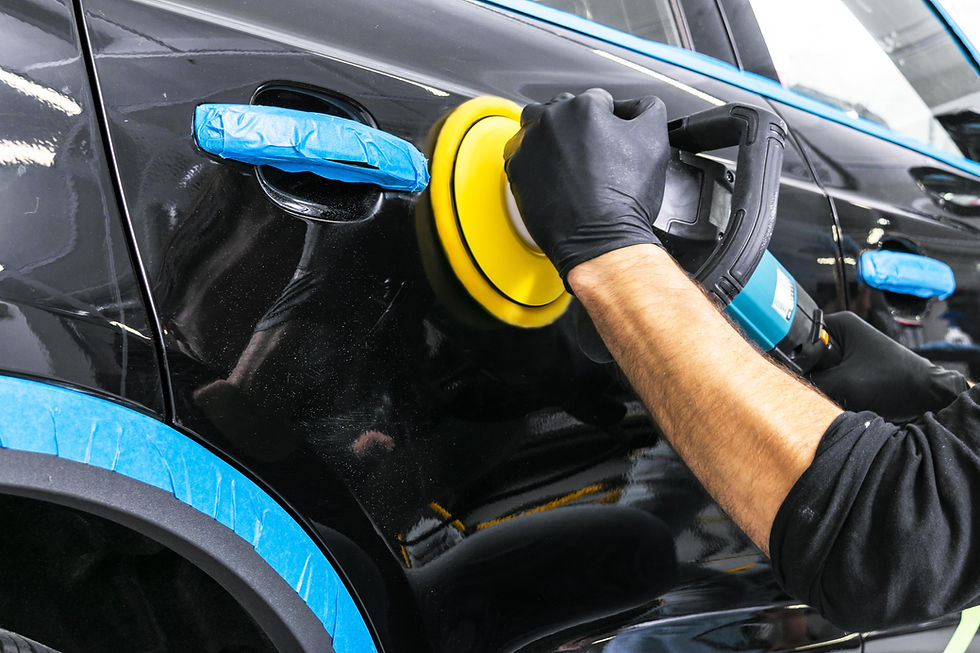
How Polishing Changes the Surface
Polishing uses controlled abrasives to refine the upper portion of the clear coat.
Depending on the condition of the paint, different levels of correction may be considered.
Light Polishing
A mild process may improve gloss and reduce very fine imperfections.
Moderate Correction
More noticeable defects may require a stronger combination of polishing equipment and compounds.
Multi-Stage Correction
Severely affected surfaces may require multiple stages, beginning with a more abrasive process and progressing toward finer polishing.
The appropriate approach depends on paint condition rather than simply choosing the strongest available method.
Why Aggressive Correction Is Not Always Better
Automotive clear coat is not unlimited.
Every correction process that removes material reduces the remaining thickness of the protective layer to some degree.
Removing more paint is not automatically better.
A responsible approach aims to achieve a noticeable improvement while preserving as much healthy clear coat as reasonably possible.
This is particularly important on vehicles that have already received correction work in the past.
Areas That Require Extra Care
Certain parts of a vehicle may require additional attention.
Examples include:
Sharp body lines
Edges
Raised contours
Plastic trim
Areas near badges
Previously repaired panels
Paint thickness can vary across different sections of the same vehicle. Careful technique helps reduce unnecessary material removal.

Factors That Affect Correction Results
Several variables influence the final appearance.
Paint Hardness
Some paint systems resist correction more than others.
Defect Severity
Deep scratches require different treatment from light swirl marks.
Paint Thickness
Limited clear coat restricts how aggressively the surface can be corrected.
Previous Repairs
Repainted panels may behave differently from factory-painted sections.
Equipment and Technique
Polisher type, pad selection, compound choice, speed, pressure, and working time all affect the outcome.
These factors explain why correction should be treated as a specialized surface-care process.
Local Environmental Exposure
Daily driving conditions can influence how quickly paint develops visible defects. People researching Paint correction Lincoln, RI often want information about restoring paint affected by road debris, winter conditions, improper washing, sunlight, water deposits, and everyday environmental exposure. The condition of each vehicle varies, so surface assessment is important before deciding what level of correction is appropriate.
Maintaining the Finish After Correction
Corrected paint still requires careful maintenance.
Without appropriate care, new imperfections can gradually appear again.
Helpful practices include:
Using clean washing equipment.
Removing loose dirt before contact washing.
Avoiding rough drying materials.
Cleaning bird droppings promptly.
Removing tree sap carefully.
Keeping the vehicle protected from excessive environmental exposure when possible.
Maintenance is an important part of preserving a corrected surface.
Washing Techniques That Reduce New Defects
Many paint imperfections can be linked to repeated contact with contaminated washing equipment.
A safer routine includes:
Rinsing loose dirt from the vehicle.
Using clean wash equipment.
Working from cleaner areas toward dirtier sections.
Rinsing equipment regularly.
Drying with suitable materials.
Avoiding unnecessary pressure.
Reducing friction during washing can help maintain the appearance of corrected paint.
When Paint Correction May Not Be Appropriate
Not every defect can or should be fully removed.
Deep scratches that extend through the clear coat may require a different repair approach. Areas with very limited paint thickness may not be suitable for aggressive correction.
In some situations, improving the appearance rather than attempting complete defect removal is the safer objective.
The goal should always be to balance visual improvement with preservation of the vehicle's paint system.
Combining Correction With Surface Protection
Once paint has been corrected, maintaining the improved finish becomes important.
Various protection methods may be considered, including:
Automotive wax
Paint sealants
Ceramic coatings
Paint protection film
Each option has different characteristics and serves different purposes.
Surface protection does not replace careful washing, but it can complement a broader maintenance routine.
Long-Term Benefits of Proper Surface Care
Consistent paint care can help:
Preserve gloss
Reduce visible imperfections
Protect the clear coat from unnecessary wear
Make the vehicle easier to maintain
Identify new defects earlier
Maintain a cleaner exterior appearance
The long-term condition of automotive paint depends heavily on everyday care habits.
Conclusion
Paint correction is a controlled process intended to improve the appearance of automotive paint by reducing suitable surface imperfections. Successful results depend on careful inspection, proper preparation, appropriate polishing techniques, and consideration of clear-coat thickness. Not every defect should be completely removed, and aggressive correction can create unnecessary risks. After correction, careful washing and appropriate surface protection can help preserve the improved finish and reduce the development of new imperfections.
Comments